
The loop in one paragraph
A real match goes up with a countdown and a prize pool. You build a team inside a player budget before the deadline, enter a contest sized to your appetite, and your eleven scores off the real match's balls: runs, wickets, catches, economy. The leaderboard settles when the match does, winnings land in the wallet. Full detail page by page: how to play, contest types, team rules, scoring.
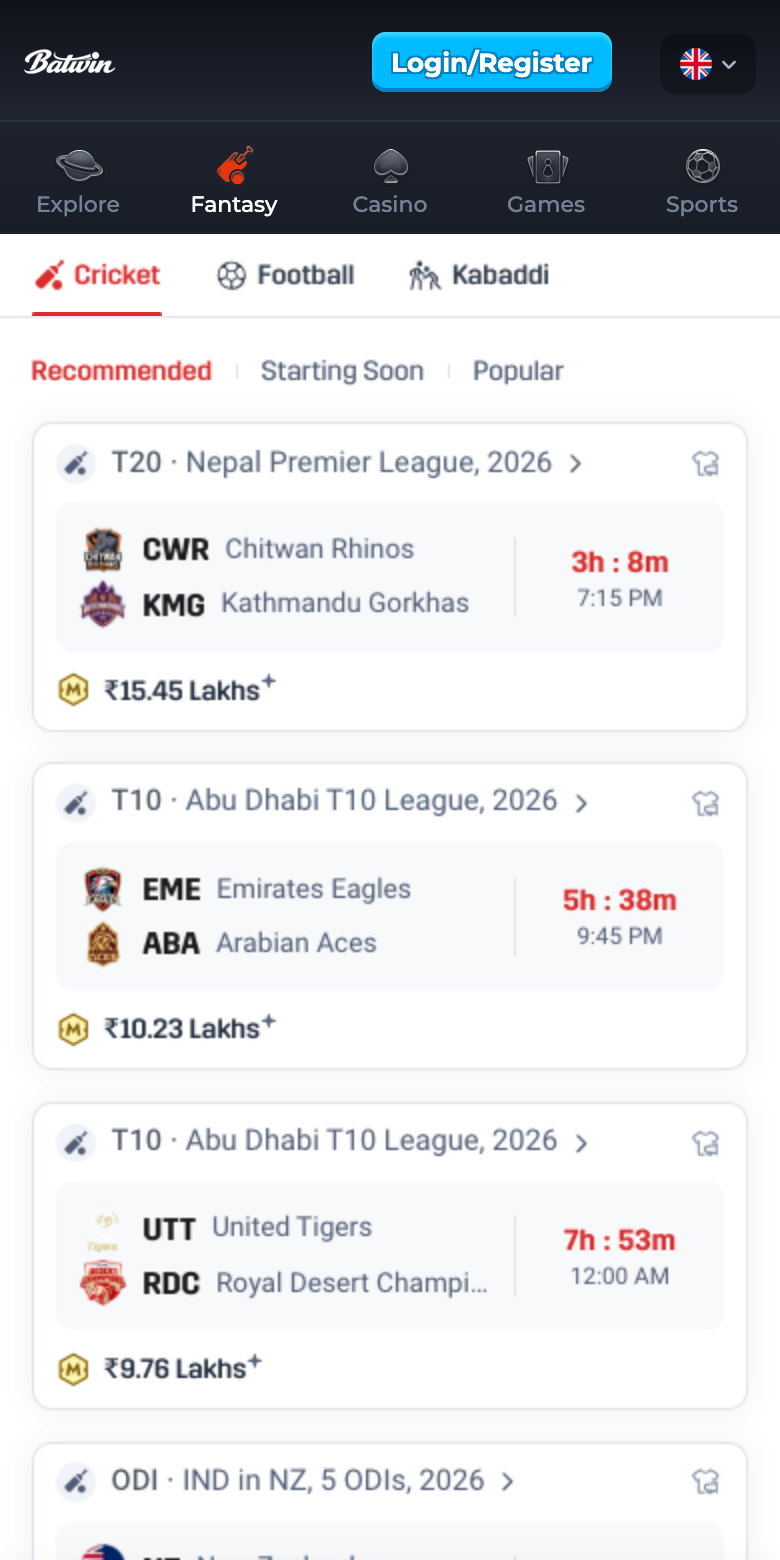
What was live at the last check
Seen November 2026 at app version 1.14. Fixtures roll daily; cricket leads, football and kabaddi fill between. The live lobby has today's board.
Why fixtures beyond India matter
The board follows the cricket clock, not one league: Nepal Premier League evenings, Abu Dhabi T10 nights and the Indian T20 calendar hand off to each other, so a contest is nearly always open. The IPL guide covers how the biggest window changes pool sizes and deadlines.
Entries start free
Registration is free and practice contests cost nothing when they run. Paid contests show entry fee and pool before you commit; nothing is charged past the entry you chose. One wallet covers fantasy and everything else in the app.
New to team building? The team rules page explains the budget, role slots, and captain picks that double points; scoring shows exactly what a run, wicket or catch pays.
Browser now, app when you care
The H5 lobby runs contests in Chrome or Safari with no install; the 3.28 MB app (Android 7.0+) adds a home icon and push alerts before deadlines. Same account both ways, switch any time.
Deadlines are the one thing push alerts genuinely help with: teams lock when the match card's countdown reaches zero, and after that nothing changes.
A match day, hour by hour
| When | What to do | Why it matters |
|---|---|---|
| Morning | Pick the fixture, read the venue and recent form | Short boundaries and slow pitches change who scores |
| 2 hours out | Build the first eleven inside the budget | Unhurried builds make better cheap-slot calls |
| Around the toss | Watch for the Lineups Out tag on the match card | Benched players score zero; this is the swap window |
| Before the countdown ends | Final captain call, enter the contest | Teams lock at the official start time shown on the card |
| During play | Watch the live leaderboard, nothing to manage | Points land ball by ball from the official feed |
| After the result | Settlement hits the wallet | Winnings are withdrawable once the match is official |
Wallet, entries and withdrawals
One wallet runs the whole app: a fantasy entry fee, a rummy buy-in and a casino stake all draw from the same balance, and contest winnings land back in it. Deposits open the paid board; withdrawals run through the wallet's own flow with the operator's verification checks before the first cash-out. Entry fees deduct once at join. Guaranteed contests run however many spots fill, and the operator can extend a deadline or abandon a contest when the toss is delayed or weather interrupts play.
Beyond cricket: football and kabaddi
The same loop runs on football fixtures (goals, assists, clean sheets score instead of runs and wickets) and kabaddi (raid and tackle points). Cricket carries the calendar and the big pools, but on a quiet cricket evening the other two keep the board alive. Team budget and captain multipliers work identically, so the craft transfers.
Habits that survive a season
- One contest per match beats five rushed entries; T20 variance punishes volume without research.
- Lineups land before the lock: the toss usually brings the confirmed elevens while the card's countdown is still running. Confirmed starters in, benched names out, in that window.
- Captain from conviction: the 2x multiplier is the whole leaderboard. Safe captain in head-to-heads, brave captain in pools (why).
- Weekly budget, written down. Entry fees are small; frequency is what adds up. The payout tables show most entries lose by design.
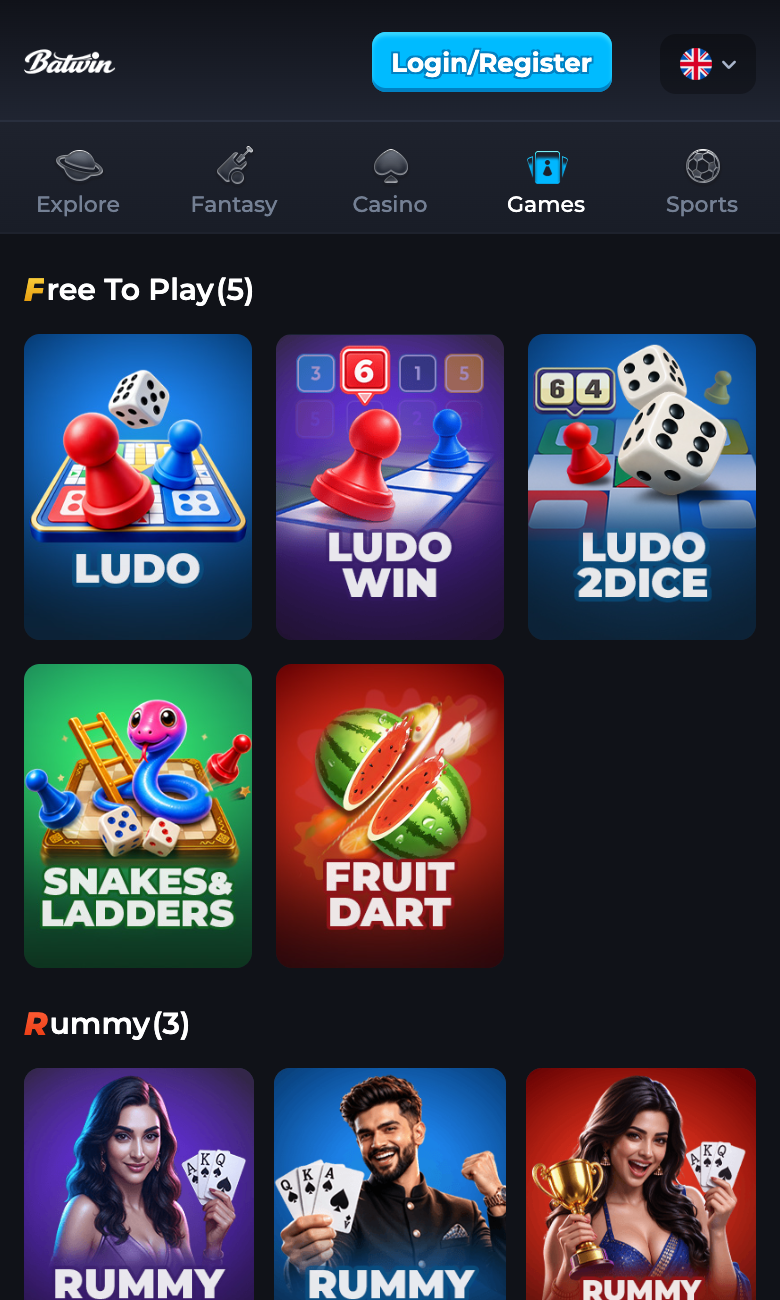
- No-stake evenings exist: the app's free games row costs nothing when you want the phone without the wallet.
Five mistakes that cost beginners
- Leaving it to the last minute: teams lock when the card's countdown ends, and latecomers watch a match they never entered. Set the app's push alert or an alarm.
- Big names over confirmed starters: a benched star scores zero; a cheap confirmed opener scores something. Lineups are usually confirmed at the toss.
- Captaining by reputation: the 2x goes to form and role, not fame. Death-overs bowlers and top-three batters convert the multiplier most often (scoring shows why).
- Entering the biggest pool by default: mega pools pay a long thin tail. The payout table, not the headline pool, tells you the break-even rank.
- No weekly number: fees are small and frequent, which is exactly how budgets leak. Decide the week's total before the week starts.
Quick glossary
| Term | Meaning |
|---|---|
| Deadline | The moment teams freeze: the official match start, shown by the card's countdown |
| Captain / vice-captain | Your 2x and 1.5x point multipliers, chosen per team |
| Credits | The player-price budget every eleven must fit under |
| Guaranteed pool | A contest that takes place regardless of how many spots fill |
| Break-even rank | The leaderboard position where the payout equals your entry fee |
| Mega pool | A thousands-strong contest: small fee, long payout tail, huge top prize |
The app, measured
| Version | 1.14, checked November 2026 |
|---|---|
| Download | 3.28 MB APK, direct link, Android 7.0+ |
| No install | H5 lobby in any modern browser, iPhone included |
| Account | One wallet across fantasy, casino and games sections |
| Alerts | App push covers team deadlines; the browser version has none |
Site map
- How to play: first contest, step by step
- Contests: head-to-head to mega pools, and how payouts split
- Team rules: budget, roles, captain and vice-captain
- Scoring: the point values that decide leaderboards
- IPL guide: the season window that changes everything
- FAQ: quick answers, linked to their home pages