
The edge, defined
During big-league windows, every entrant reads the same previews, sees the same confirmed lineups early, and lands on the same captain; the lobby's running IPL payout banner, past ₹497 Cr across seasons, marks where that crowd plays. On the side boards the equation flips. Nepal Premier League evenings and Abu Dhabi T10 nights run continuously with almost no coverage, most entries are built on name recognition in the final minutes, and a prepared entry competes against guesses. Where information is scarce, the person who gathers a little of it holds the advantage, and gathering it takes about twenty minutes.
What these boards actually carry
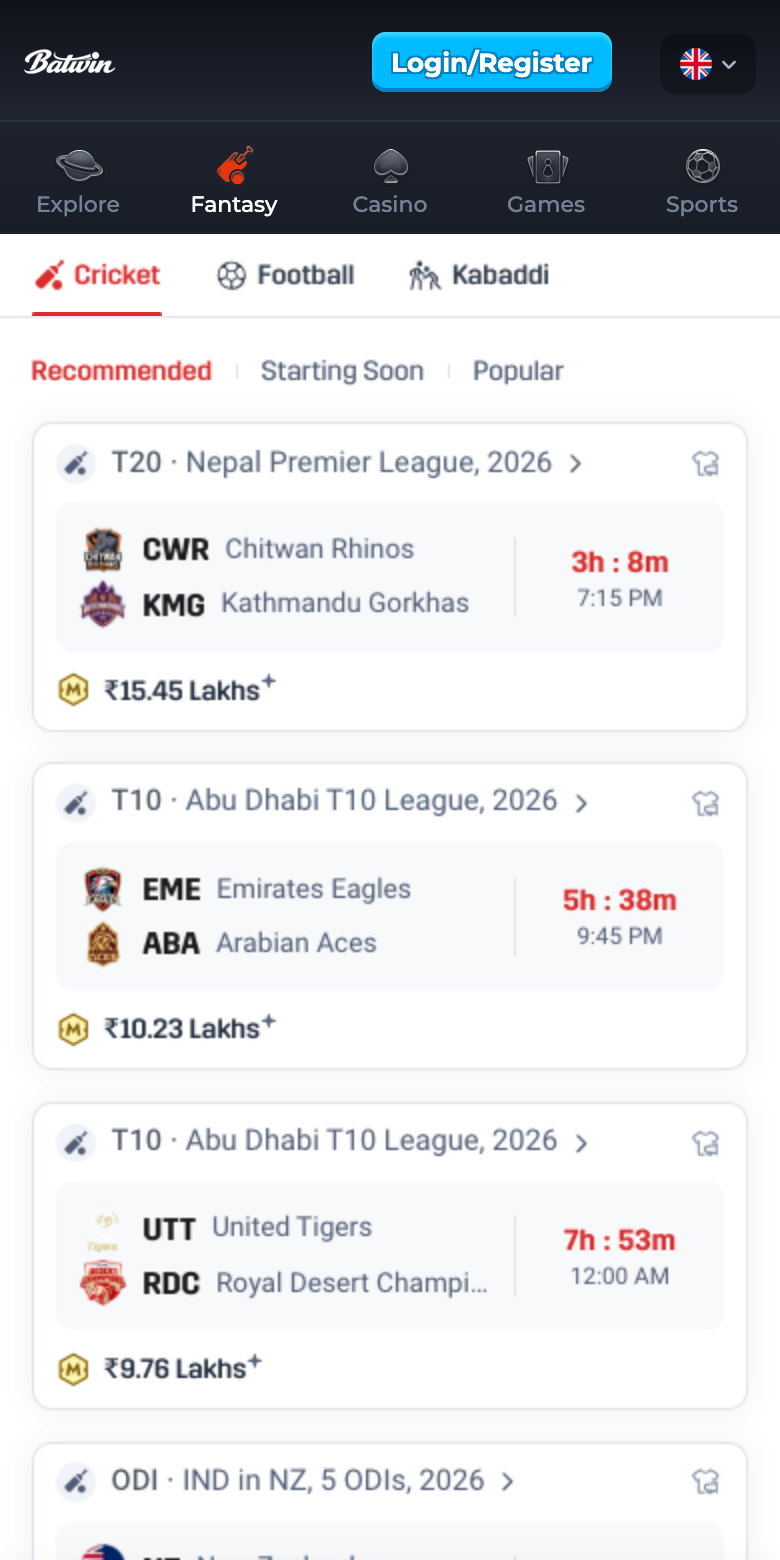
All three were listed on one evening's board. Not season-window money, but real pools on fixtures most entrants never research, often stacked on a single evening.
Why thin coverage favours the prepared
No television previews means no consensus captain, so ownership spreads thin and a correct read gains more rank than the identical read would in a big-league pool. Rosters rotate, so last month's star may not start tonight, which punishes entrants picking from memory. Entry counts run smaller, which shortens the distance between a good build and a paying rank; the payout table logic works the same, there are simply fewer entries between you and the line. The work others skip is the entire edge, so do the work.
The twenty-minute routine
- Open the fixture card when the countdown is still hours long and note the venue and start time; late T10 fixtures mean dew is in play.
- Pull up both sides' most recent completed matches. Scorecards are the one information source these leagues always produce.
- Note who opened the batting, who kept wicket and where the keeper batted, and who bowled the final two overs. Those are the three highest-value facts a scorecard holds.
- Shortlist players with two scoring routes, the bat-plus-bowl and bat-plus-gloves types, since thin information punishes single-route picks hardest when roles shift.
- Build inside the normal constraints and leave the final captain call open; the three checks run fine on scorecard evidence alone.
- Return when the card shows Lineups Out, swap out anyone missing from the confirmed eleven, and finish before the countdown ends. The lineup is where rotation either confirms your read or hands you a correction window.
Reading roles when nobody writes previews
Recent scorecards answer the questions previews would have answered. The batter listed first two matches running is the opener, no announcement needed. The bowler finishing both innings is the trusted closer, which matters because the closing overs hold the wicket points. A keeper batting in the top three is the credit-dense pick the T10 build leans on. Two scorecards of evidence beat any reputation these leagues imported, and reputation is what the rest of the field is using.
Planning a three-fixture evening
Side boards stack fixtures, and the November 2026 evening above is the standard shape: an NPL match first, an Abu Dhabi T10 at night, a second T10 after midnight. Treat the stack as a schedule problem. Run the research routine in the afternoon on the one fixture whose toss you can actually attend, build that eleven early, and let the other two pass. An entry whose toss you sleep through is an entry you cannot verify, and on rotation-heavy boards an unverified entry is a coin flip carrying your fee. The late fixture only makes sense on nights you will genuinely be awake for a toss near midnight.
Contest sizing follows the same logic as anywhere else on the ladder, with one adjustment: fields here are small enough that head-to-heads and small leagues fill slower, so enter earlier than you would in a season window rather than waiting for the countdown's final minutes. The pool number on the card keeps moving until the lock, and the thin field is the feature you came for, not a fault to wait out.
The risks that ride along
- Rotation is constant. Squads chop between fixtures far more than big-league sides, so the gap between Lineups Out and the deadline is where entries are saved or sunk. Build early, verify when lineups land, every time.
- Variance does not shrink. Ten-over games swing on one over regardless of research quality; a good process still loses individual nights.
- Frequency is the quiet cost. Three fixtures in one evening invites three entries. The weekly plan exists precisely for boards like this; pick the fixture you researched and skip the rest.
- Pools are honest but smaller. A researched build here wins more often, for less per win, than the same build in a season-window pool. That is the trade, and it favours anyone still improving.
Field sizes, measured
The size gap is not a hunch. The headline contest on each fixture has cost the same ₹49, yet the fields have differed more than tenfold: 19,000 spots on an Abu Dhabi T10 night, 20,000 on an Under-19 Asia Cup match, 90,000 on a WBBL game and 270,000 on an India ODI. Same fee, a fraction of the rivals. That ratio is the whole case for side boards, and it is why the routine above pays off where the crowd is thinnest.
Use it as the practice ground
Softer fields and small entry fees make these boards the right place to turn the basic loop into habit: scorecard research, early builds, lineup checks, one contest per match. Free practice contests appear here too, and building an eleven costs nothing even unentered. A player who spends a month on NPL and T10 evenings arrives at the next big window with formed habits and faces a field that mostly has none, which is the IPL preparation the season guide recommends from the other direction.
Are small league pools too small to be worth the effort?
The November 2026 board answered with ₹976.8K to ₹1.54M on a single evening, and smaller fields put the paying ranks closer than any season-window mega pool does. The ceiling is lower; the probability of reaching it researched is higher. For most entrants most weeks, that trade runs in their favour.